Missed the Deadline to Claim a Deceased Spouse’s Estate Tax Exemption? You May Have Options.
7/8/2026
The United States Tax Court decision Estate of Billy Rowland, deceased v. Commissioner T.C. Memo 2025-76 (July 15, 2025) (hereinafter “Rowland”) stresses the importance of understanding which reporting rules apply to an estate and how to comply in order to benefit from I.R.C. §2010(c)(4), which allows a married couple to benefit from both spouses’ basic exclusion by shifting the first deceased spouse’s unused exclusion (DSUE) to the surviving spouse.
Since codification of DSUE, Treasury initially issued Rev. Proc. 2017-34 and then updated it with Rev. Proc. 2022-32 to set forth a simplified method for estates that would not otherwise be required to file an estate tax return under IRC §6018(a), based on the gross value of the estate:
- Treasury extended the due date for such estates to file an estate tax return to two years (Rev. Proc. 2017-34) and then to five years (Rev. Proc. 2022-32) from the death of the deceased spouse.
- The simplified reporting rules permit the executor to provide only the description, ownership, and beneficiary information for charitable and marital property, along with data necessary to establish the deduction.
- An executor may estimate the value of assets qualifying for the marital and charitable deductions in computing the gross estate value.
In Rowland, the Tax Court granted the IRS’s motion for partial summary judgment affirming the IRS’s disallowance of the taxpayer’s deceased spouse’s portability election under the administrative safe harbor. Unfortunately for the taxpayer in Rowland, the structure of the trust in the deceased spouse’s estate precluded the use of the relaxed reporting regime because the value of the marital and charitable deduction was not determinable without reference to the value of assets passing by the decedent to the grandchildren’s trusts which requires reporting the fair market value of the asset. Specifically, the Rowland estate provided for percentage distributions to a charitable foundation and to the surviving spouse with the residue going to trusts for grandchildren (emphasis added). The Tax Court concluded that the Rowland executor could not rely on the administrative safe harbor but was instead required to follow the general rules applicable to all estates which requires the fair market value to be used. In disallowing the portability election, the Tax Court pointed out that, although the estate tax return was filed beyond the nine month statute of limitations, but within the 2 year extension allowed under Rev. Proc. 2017-34, it did not include detailed valuation disclosures as required for estates with assets that qualify for safe harbor reporting, and therefore did not satisfy the portability election requirement.
While many estates will still qualify to elect portability using the simplified reporting method within five years of death under Rev. Proc. 2022-32, Rowland reinforces the fact that the return must be complete and properly prepared. Because the safe harbor rules were inapplicable in Rowland, the surviving spouse was denied the deceased spouse’s unused exclusion, resulting in the assessment of a tax that would not have otherwise been due.
The portability election is an important part of estate planning. If you have any questions as to the election, time frames involved, and the appropriate level of detail for the Form 706 required under Rev. Proc. 2022-32, please contact:
Susan K. Dromsky-Reed, Esq., Member and Co-Chair, Trusts and Estates Practice, at sdromsky-reed@bracheichler.com or 973-403-3122
Stuart M. Gladstone, Esq., Member and Co-Chair, Trusts and Estates, at sgladstone@bracheichler.com or 973-403-3109
David J. Ritter, Esq., Member and Chair, Tax Practice, at dritter@bracheichler.com or 973-403-3117
Joy E. Matak, Esq., Member, Trusts and Estates Practice, at
jmatak@bracheichler.com or 973-364-8307
*This is intended to provide general information, not legal advice. Please contact the author if you need specific advice.
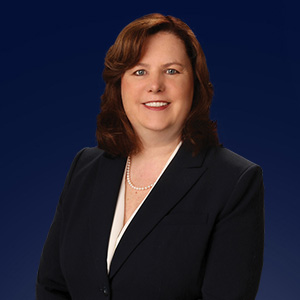
Susan K. Dromsky-Reed
Member
Trusts and Estates, Tax, Family Law Services
973.403.3146 · 973.618.5546 Fax
sdromsky-reed@bracheichler.com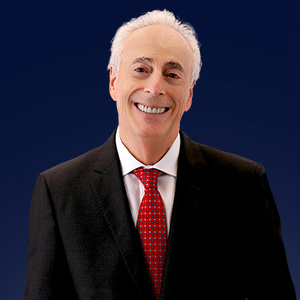
Stuart M. Gladstone
Member
Trusts and Estates, Corporate Transactions & Financial Services, Tax
973.403.3109 · 973.618.5509 Fax
sgladstone@bracheichler.com
David J. Ritter
Member
Tax, Corporate Transactions & Financial Services, Trusts and Estates
973.403.3117 · 973.618.5517 Fax
dritter@bracheichler.com
Joy Elizabeth Matak
Member
Trusts and Estates, Tax
973.287.4286 · 973.602.8673 Fax
jmatak@bracheichler.com



Related Practices: Tax, Trusts and Estates
Related Attorney: Susan K. Dromsky-Reed, Stuart M. Gladstone, David J. Ritter, Joy Elizabeth Matak