


Recording technology has raced far ahead of where it stood just five years ago. People may presume a phone is recording them. It is far less obvious that a pair of glasses, or an ordinary-looking pen resting on the table, could be capturing an entire disciplinary meeting without anyone noticing. States treat recording consent differently—New York and New Jersey are one-party consent states, while Pennsylvania requires all-party consent, and Connecticut
requires all-party consent for phone calls but only one-party consent for in-person conversations. A multi-state call can shift from lawful to unlawful the moment a participant in a stricter jurisdiction joins the line, exposing parties to civil or criminal liability.
Beyond legality, the practical question is should a conversation be recorded? The obvious benefit is an accurate record of what was said and by whom—an employee may capture a discriminatory remark, or the recording may definitively show no such remark was made. Recordings can also demonstrate proper or improper handling of accommodation requests and serve as powerful evidence in employment lawsuits for either side. However, employers who record HR interactions risk creating discoverable records that, out of context, may hurt their position—especially when inexperienced HR representatives are involved. Additional concerns include the perception that the recorder is baiting others into compromising statements.
Once a recording exists, it is fair game in litigation. The party who made it, must preserve the complete, unedited original. Recordings may open the door to forensic imaging of devices under the theory that additional recordings likely exist. Trimming or selectively producing recordings can lead to spoliation sanctions, including adverse inferences, legal fees, or dismissal of claims. Every company should have a recording policy that is thought through and tailored to your workplace.
If you have any questions about this alert, please contact:
Eric Magnelli | 973.403.3110 | emagnelli@bracheichler.com
Katelyn A. Marquez | 973.403.3153 | kmarquez@bracheichler.com

Effective July 17, 2026, New Jersey significantly expanded employee leave protections under both the New Jersey Family Leave Act (NJFLA) and the state’s Family Leave Insurance (FLI) and Temporary Disability Insurance (TDI) programs. Now most employees in New Jersey can qualify for up to 26 weeks of job protected leave, regardless of the size of your workforce. This represents a significant shift in New Jersey employment law.
Most notably, employees receiving FLI or TDI benefits are now entitled to job-protected leave for the duration of their approved benefit period, with reinstatement rights to the same or an equivalent position upon their return. Previously, FLI and TDI provided wage replacement but did not independently provide job protection. Such protections existed only if an employee also qualified for leave under the NJFLA or the federal Family Medical Leave Act (FMLA). The recent amendments extend job protection during an employee’s approved FLI or TDI benefit period, regardless of employer size, employee’s length of service, or hours worked. Because TDI provides up to 26 weeks of benefits, employees may now receive up to 26 weeks of job protected leave.
The amendments also broaden the scope of the NJFLA itself by expanding coverage to employees of businesses with 15 or more employees, reduced from 30 employees, and reducing the employee eligibility requirements. Specifically, while previously, employees had to have worked for at least 12 months and 1,000 hours to be eligible for leave, employees are now eligible for NJFLA leave after only three months of employment and 250 hours worked in the preceding 12 months. These changes significantly expand both employer coverage and employee eligibility under the NJFLA, bringing many smaller employers and newly eligible employees within the statute’s protections.
Employers with New Jersey employees should consult with legal counsel to update their leave policies, employee handbooks, and leave administration practices to ensure compliance with the new requirements.
If you have any questions about this alert, please contact:
Matthew M. Collins | 973.403.3151 | mcollins@bracheichler.com
Sarah A. Gober | 973.364.8375 | sgober@bracheichler.com

New Jersey employers operate in an economy where competitive advantage increasingly depends on proprietary information—customer relationships, pricing models, proprietary software, manufacturing formulations and processes, and strategic business plans. When key employees depart for competitors or launch rival ventures, the risk of trade secret loss is acute. Both the common law and more recent statutory law provide a robust framework for protecting this information, anchored by the New Jersey Trade Secrets Act, N.J.S.A. 56:15-1 et seq. (NJTSA). Forty-eight states have adopted some version of the Uniform Trade Secrets Act, which is the model upon which the NJTSA is built. But proactive protective measures and swift action against those who misappropriate trade secrets and confidential information are critical to successfully protecting against and remedying theft of trade secrets.
The NJTSA, effective since January 2012 defines a “trade secret” broadly as information, held by one or more people, without regard to form—including a formula, pattern, business data compilation, program, device, method, technique, design, diagram, drawing, invention, plan, procedure, prototype, or process—that derives independent economic value and is the subject of efforts to maintain its secrecy. Misappropriation is only actionable
though, if the recipient of the information knew or had reason to know the trade secret was derived through improper means—it does not impose strict liability for innocent acquisition. In addition, something not qualifying as a trade secret under the NJTSA, may still warrant protection as “confidential information” under New Jersey common law (i.e., court decision-based law). In either case, employers must take reasonable steps to protect that which they claim is confidential or a trade secret, and the failure to do so can stop an employer’s efforts to recover or stop the misuse of the information dead in its tracks.
Employers have several options to maintain their confidential and proprietary information. Non-Disclosure Agreements (NDAs) and Confidentiality Agreements are the basic starting point and generally are considered “reasonable efforts” to maintain secrecy, a necessary requirement under the law. Non-solicitation agreements—prohibiting a departing employee from soliciting the employer’s customers or other employees—can be used to protect customer lists and the like, and are generally considered more easily enforced than non-compete agreements in New Jersey, although still subject to a reasonableness standard. Despite all the hullabaloo over the past several years about restrictive covenants being made illegal, they are still enforceable in New Jersey, New York, and beyond.
Beyond standalone NDAs or restrictive covenants, employers should also generally include confidentiality obligations in employment agreements, offer letters, independent contractor agreements, and vendor/supplier contracts. Robust internal policies are essential to demonstrating reasonable measures under the NJTSA. Key measures include, but are not limited to access controls and exit protocols for departing employees. Annual or more frequent reminders to the workforce about their confidentiality obligations and the seriousness with which the employer treats confidentiality are also helpful tools. These measures serve dual purposes: they protect the information operationally and they create the evidentiary record of “reasonable efforts” required to establish trade secret status in litigation.
If you have any questions about this alert, please contact:
Anthony M. Rainone | 973.364.8372 | arainone@bracheichler.com
Michael A. Spizzuco, Jr. | 973.364.8342 | mspizzuco@bracheichler.com

Although the Federal Trade Commission (FTC) attempted a blanket nationwide ban on one type of restrictive covenant (non-compete agreements) in 2024, you may recall that that rule was struck down by a federal court in Ryan LLC v. FTC, the appeals were formally dismissed in September 2025, and the rule was removed from the Code of Federal Regulations entirely in February 2026. While the FTC continues to pursue targeted enforcement actions in this space, there is no overarching federal standard governing restrictive covenants, and the legal landscape remains entirely state-driven.
While historically, enforcement and blue-penciling of these covenants was a creature of common law, a growing number of states have enacted specific statutes addressing these agreements. The majority of states, including New Jersey, New York, Pennsylvania, Ohio, Arizona, Delaware, Kansas, Kentucky, Michigan, Mississippi, Missouri, Nebraska, South Carolina, Vermont, Virginia, and Wyoming, have no comprehensive restrictive covenant statute and instead rely on common law, where courts evaluate enforceability on a case-by-case basis. These judicial decisions are frequently issued by courts so it is important to stay on top of the case decisional law in a state in which you have employees.
States like California, Minnesota, North Dakota, and Oklahoma have taken the strongest position by banning employee non-competes almost entirely (though they still allow them in limited circumstances such as the sale of a business), while generally permitting other forms of restrictive covenants like non-solicitation and confidentiality agreements provided they are reasonable. Another group of states, Colorado, Illinois, Massachusetts, Oregon, New Hampshire, Washington, and the District of Columbia, have passed statutes imposing guardrails on various restrictive covenants, such as minimum salary thresholds an employee must earn before a non-compete or non-solicitation covenant can apply, or requirements that employers give advance written notice before any such restriction takes effect. Still other states, such as Texas, Georgia, Arkansas, and Alabama, take a more permissive approach, with statutes that spell out what kinds of business interests restrictive covenants may protect and establish default time and geographic limits that courts will generally treat as reasonable for non-competes, non-solicitation agreements, and similar restrictions. Washington State has enacted a full ban, set to take effect in June 2027.
As reminder in New Jersey, courts apply a well-established common law reasonableness test when deciding whether to enforce a restrictive covenant. To be upheld, a non-compete or similar restriction must: (i) protect a legitimate business interest of the employer (such as confidential information, trade secrets, or customer relationships); (ii) be reasonable in its duration, geographic scope, and the type of activity restricted; and (iii) and must not impose an undue hardship on the employee. New Jersey courts, rather than striking down an overly broad restriction, will blue pencil the provision; meaning it narrows its terms to what the judge in that case considers fair and reasonable.
New Jersey’s legislature does have a proposed bill that would drastically change the state’s restrictive covenant landscape but as of today’s date, it has not been adopted as law in New Jersey. We will provide an update on that pending legislation if it becomes law.
If you have any questions about this alert, please contact:
Autumn M. McCourt | 973.403.3104 | amccourt@bracheichler.com

The New Jersey Department of Labor & Workforce Development has adopted new regulations, effective October 1, 2026, providing expanded guidance on the ABC test used to distinguish independent contractors from employees. See N.J. Admin. Code § 12:11-1 et seq. Significantly, a worker is presumed to be an employee until the company proves otherwise, regardless of any classification under federal law. To establish independent-contractor status, the employer bears the burden of proving all three elements of the ABC test:
(a) is free from the employer’s control or direction over the performance of services, both contractually and in fact;
(b) renders service outside the usual course of the business or outside of all the employer’s places of business; and
(c) is customarily engaged in an independently established trade, occupation, profession, or business.
The new regulations provide detailed, multi-factor guidance on each element, giving employers a practical checklist for classification decisions.
The stakes of misclassification are significant. While engaging independent contractors can yield cost savings—including no obligation to withhold payroll taxes, make matching FICA contributions, provide paid time off, or allow the
individual to participate in employee benefit plans—an employer that gets the classification wrong faces substantial exposure. Potential liabilities include back taxes and penalties for failure to withhold, back pay and liquidated damages for unpaid overtime, penalties for underpayment of workers’ compensation premiums and unemployment taxes, damages under federal and state anti-discrimination laws, and the worker’s attorneys’ fees and costs. Notably, it is irrelevant that the worker requested or agreed to independent-contractor status; the DOL or the courts will ultimately make their own determination.
In the official comments to the new regulations, the DOL maintains that the updated rules are consistent with existing law and were promulgated in response to the N.J. Supreme Court’s suggestion in East Bay Drywall, LLC v. Department of Labor and Workforce Development, 251 N.J. 477 (2022), that the DOL provide more specific guidance on application of the ABC test. Given the complexity of these rules and the consequences of noncompliance, employers should exercise caution before designating any worker as an independent contractor.
If you have any questions about this alert, please contact:
Douglas E. Motzenbecker | 973.364.5209 | dmotzenbecker@bracheichler.com
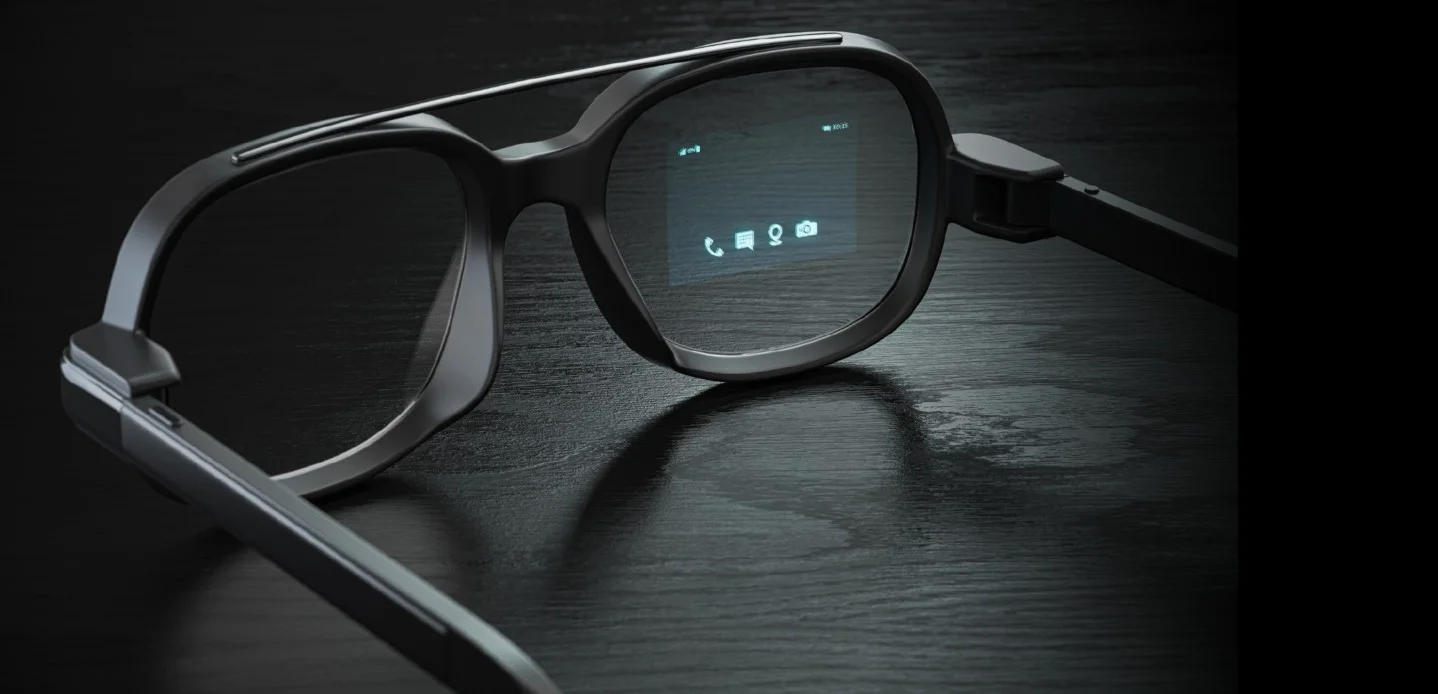
“Smart” glasses—eyewear that records audio and video and, with newer models, transmits those recordings to AI large language model vendors to generate content—are becoming more commonplace. Domestic sales reached $2.5B last year, and a compound annual growth rate in excess of 20% is expected over the next decade, according to some estimates. Their adoption and donning in the workplace are raising some very serious concerns for employers. Proactive employers have instituted policies either prohibiting or limiting their use whereas other employers are encouraging their use to perform certain job duties.
As a recording device, Smart Glasses raise the same concerns raised by an employee’s use of any recording device in the workplace: the recording may be illegal if conducted in a jurisdiction requiring the consent of all parties to being recorded; the surreptitious recording of co-workers inherently makes people uneasy about speaking freely and may violate existing employer policy; the recording of confidential information may violate employer policy and, in certain circumstances (such as with HIPAA-protected health information), may violate the law; an employee covered by the National Labor Relations Act may have the right to record in the workplace for mutual aid and protection; the use of Smart Glasses might be a reasonable accommodation to an employee’s disability;
and the employer sanction of recording may violate the law of some jurisdictions unless the employer provides advance notice.
Employer concerns are compounded when the Smart Glasses are AI-enhanced. The transmission of workplace information without employer authorization to a third party that will use that information not only to generate content for the specific user but almost certainly to generate content for millions of other users raises very problematic issues for any employer. It’s not far-fetched that the image of a co-worker or the text of highly confidential information could be included in content generated for any user of that AI large language model.
Employer responses to these issues will vary. Some employers may desire to ban Smart Glasses from the workplace. Other employers will want to place limits on their use. What is not recommended, however, is to ignore the issue until one employee reports to management a co-worker’s donning of Smart Glasses at work. A reactive response will inevitably be half-cocked and not well received by a court or regulator.
If you have any questions about this alert, please contact:
Jay Sabin | 917.596.8987 | jsabin@bracheichler.com

AUTUMN M. MCCOURT
MEMBER
Autumn has been with Brach Eichler since 2012, representing corporate and individual clients in complex litigation across both civil and criminal matters in state and federal courts. She has deep experience with a broad range of matters, including complex commercial litigation, business contract and shareholder disputes, consumer fraud actions, employment and construction matters, unfair competition claims, and landlord/tenant conflicts. Outside the office, Autumn enjoys staying active with cardio-kickboxing classes and can often be found cheering on her children at their baseball, softball, and football games.

SARAH A. GOBER
COUNSEL
Sarah has been with Brach Eichler since 2025. She focuses her practice on employment law, helping employers navigate constantly evolving employment laws and developing practical solutions to day-to-day employee relations challenges. In her free time Sarah enjoys travelling and keeping up with her three boys.

DOUGLAS E. MOTZENBECKER
COUNSEL
Doug recently joined Brach Eichler and works within its Commercial Litigation and Labor and Employment Groups. He has nearly thirty-five years of experience in actions arising under ERISA and various state and federal employment statutes, having appeared before the EEOC, the NLRB, and U.S. Department of Labor. He has tried numerous cases to verdict, argued multiple appeals, published several articles, and lectured extensively on ERISA and other subjects. Doug and his wife are avid travelers with a passion for beach destinations—particularly Hawaii and Mallorca. Parents of two grown children, they live in Madison, New Jersey, where on any nice day you can find Doug outside tending to the yard.

- On August 8, Labor and Employment Law Member, Jay Sabin and Healthcare Law Member, Lani M. Dornfeld, CHPC, co-hosted a podcast on Generative AI vs. Agentic AI entitled, “AI: How Businesses Have Been Managing Rapid Change.”
- On July 27, Family Law Services Chair, Carl Soranno published an article in the New York Law Journal entitled, “The Third Person in the Marriage: Taming Legal and Professional Fees in the High-Net-Worth Divorce.”
- On July 22, Litigation Chair, Keith J. Roberts and Member, Shannon Carroll issued a client alert entitled, “NJ Supreme Court Rules: Insurance Fraud Cases Belong in Court, Not Arbitration.”
- On July 21, Labor and Employment Law Member, Jay Sabin co-presented ‘AI in the Workplace: Understand the Risks. Unlock the Opportunities.’, alongside colleagues from HUB International and SAX Technology Advisors.
- On July 20, Managing Member and Healthcare Law Chair, John D. Fanburg, and Litigation Chair, Keith J. Roberts were selected to the 2026 NJBIZ Power Law List.
- On July 17, Brach Eichler Labor and Employment Practice issued a client alert entitled, “The Day New Jersey Overtook California on Employee-Friendly Leave Policies.”
- On July 8, Brach Eichler was named by NJBIZ as one of New Jersey’s Best Places to work, for the fifth, consecutive year.
- On July 6, Brach Eichler Labor and Employment Practice issued a client alert entitled, “NJ Supreme Court: Illegal Aliens Are Entitled to the Full Protection of New Jersey Workplace Laws.”
- On June 30, New Jersey Family Magazine Names Seven Brach Eichler Attorneys to “Best Lawyers” List.
- On June 23, Brach Eichler launched a new podcast series, Beyond the Brief with Keith J. Roberts. In this episode, Keith discussed “The AI Rulings Every Litigator Needs to Know.”
- On June 11, Brach Eichler proudly launched tailored legal representation of the LGBTQ+ community.
- On June 4, Litigation Chair, Keith J. Roberts was ranked Band 4 by Chambers USA for 2026 for Litigation: General Commercial.

Stan Barrett | 973.364.5210 | sbarrettl@bracheichler.com
Shannon Carroll | 973.403.3126 | scarroll@bracheichler.com
Matthew M. Collins | 973.403.3151 | mcollins@bracheichler.com
Riza I. Dagli | 973.403.3103 | rdagli@bracheichler.com
Charles X. Gormally | 973.403.3111 | cgormally@bracheichler.com
Anthony M. Juliano | 973.403.3154 | ajuliano@bracheichler.com
Thomas Kamvosoulis | 973.403.3130 | tkamvosoulis@bracheichler.com
Bob Kasolas | 973.403.3139 | bkasolas@bracheichler.com
Andrew R. Macklin | 973.447.9670 | amacklin@bracheichler.com
Eric Magnelli | 973.403.3110 | emagnelli@bracheichler.com
Stuart J. Polkowitz | 973.403.3152 | spolkowitz@bracheichler.com
Anthony M. Rainone | 973.364.8372 | arainone@bracheichler.com
Richard B. Robins | 973.447.9663 | rrobins@bracheichler.com
Jay Sabin | 973.596.8987 | jsabin@bracheichler.com
Sean Alden Smith | 973.364.5216 | ssmith@bracheichler.com
Carl J. Soranno | 973.403.3127 | csoranno@bracheichler.com
Michael A. Spizzuco, Jr. | 973.364.8342 | mspizzuco@bracheichler.com
Frances B. Stella | 973.403.3149 | fstella@bracheichler.com
Rose Suriano | 973.403.3129 | rsuriano@bracheichler.com
Lindsay P. Cambron | 973.364.5232 | lcambron@bracheichler.com
Hon. Lisa F. Chrystal, P.J.F.P.(Ret.) | 973.364.8359 | lchrystal@bracheichler.com
Mark E. Critchley | 973.364.8339 | mcritchley@bracheichler.com
Paul J. DeMartino, Jr. | 973.364.5228 | pdemartino@bracheichler.com
Edward Ellersick | 973.364.5205 | eellersick@bracheichler.com
Robyn K. Lym | 973.403.3124 | rlym@bracheichler.com
Ashley L. Matias | 973.364.8330 | amatias@bracheichler.com
Douglas E. Motzenbecker | 973.364.5209 | dmotzenbecker@bracheichler.com
Michael A. Rienzi | 973.364.5226 | mrienzi@bracheichler.com
Jeffrey Soos | 973.287.4268 | jsoos@bracheichler.com
Jenna N. Lofaro | 973.287.4559 | jlofaro@bracheichler.com
Katelyn A. Marquez | 973.403.3153 | kmarquez@bracheichler.com
Cara Joy Skelley | 973.403.3132 | cskelley@bracheichler.com
Brooke A. Taylor | 973.287.4280 | btaylor@bracheichler.com
Roseland, NJ | New York, NY | West Palm Beach, FL | Alpharetta, GA | www.bracheichler.com | 973.228.5700

STAY CONNECTED! FOLLOW US 




Attorney Advertising: This publication is designed to provide Brach Eichler LLC clients and contacts with information they can use to more effectively manage their businesses. The contents of this publication are for informational purposes only. Neither this publication nor the lawyers who authored it are rendering legal or other professional advice or opinions on specific facts or matters. Brach Eichler LLC assumes no liability in connection with the use of this publication.
